
Busca tu máquina

23311 Anuncios disponibles

Búsqueda por tipo de procesamiento

¿Tienes una máquina para vender? Publica tu anuncio ahora

Macchinari industriali
Cargando...
Cargando...

Nuestros partner

Hablemos de...

In 2025, exports of valves and taps reached €6.2 billion (+5.2% compared to 2024). Exports of valves and taps for civil use are also growing, exceeding €3.2 billion (+6% compared to 2024).

AVR – Italian Valve and Tap Manufacturers Association – will be a key player at MCE – Mostra Convegno Expocomfort, held from March 24th to 27th in Milan. In 2025, after years of contraction, exports of valves and taps for civil use to Germany will return to positive territory, with a value of 153 million euros and a growth of 12% compared to 2024 and +20% compared to 2020. Saudi Arabia is the leading destination country in terms of revenue, followed by the United States and China; Concerns remain high about the impact of geopolitical instability on strategic markets such as the Middle East, an area which overall is worth 874.9 million euros for the civil valves and taps sector alone; Other concerns include rising energy costs, currency instability, tariff uncertainty, logistical difficulties, the lack of real free movement of goods, and an unclear European regulatory framework, often perceived as poorly aligned with industry needs. AVR, in the presence of 13 international associations belonging to the International Valves and Taps Alliance, proposes to create the first "World Forum dedicated to valves and taps". The Italian valve and faucet sector remains a leading international player. According to data from the Statistics Office of Anima Confindustria, released by AVR —the Italian Valve and Tap Manufacturers' Association, affiliated with Anima —during MCE–Mostra Convegno Expocomfort , exports of the valve and faucet sector (which includes valves for construction, industrial valves, sanitary taps, and fittings) will reach nearly €6.2 billion in 2025, up 5.2% from 2024, with an estimated total turnover of €9.55 billion. Exports of valves and faucets for residential use alone exceeded €3.2 billion (+6% from 2024). Considering only residential valves and faucets, Saudi Arabia is the leading destination country in 2025, followed by the United States and China. Among the countries, the German market , after years of contraction, is returning to positive territory, with exports of €153 million and a 12% growth compared to 2024 and a 20% growth compared to 2020, reaffirming its position as the reference market for Italian exports of residential valves and faucets. This trend could offer a significant contribution to the European sector and offset, at least in part, the impact of geopolitical instability on strategic markets such as the Middle East , an area worth €874.9 million to Italy overall. Furthermore, among the countries that recorded the most positive export performances in 2025, Norway also stands out, with a 59% increase. Besides geopolitical instability and its impact on strategic markets, what other concerns do industry entrepreneurs have? 2026 will also see rising energy costs, currency instability, tariff uncertainty, logistical challenges, the lack of true free movement of goods, and an unclear European regulatory framework, often perceived as poorly aligned with industry needs. In a complex scenario like this, it is crucial to strengthen dialogue and collaboration beyond national borders, creating concrete opportunities for discussion and cooperation between businesses, institutions, and trade associations. The goal is to jointly address sensitive issues for the sector (such as PFAS, nuclear power, and lead) and identify common solutions and best practices, recognized and adopted internationally. It is precisely in this direction that AVR is committed to creating the first Global Forum dedicated to valves and faucets . This meeting aims to leverage international experiences and offer shared tools to address the main challenges common to all businesses operating in countries around the world. "The Italian valves and taps sector confirms its position as an international benchmark, thanks to highly specialized manufacturing capabilities, a strong focus on innovation, and a consolidated presence in key foreign markets, " stated Sandro Bonomi, President of AVR . " The 2025 data confirm the sector's solidity, but at the same time highlight how complex and constantly evolving the global landscape remains. In this scenario, for a highly export-oriented sector like ours, it is essential to be able to rely on conditions that support the competitiveness of companies and enhance their presence on international markets. The discussions launched at MCE with the International Valves and Taps Alliance are moving precisely in this direction: strengthening dialogue between the sector's key stakeholders and sharing a common vision of the industrial, technical, and commercial challenges that lie ahead." AVR is the federated industrial association of ANIMA Confindustria, representing Italian companies in the valve and faucet industry, with over 80 member companies. In 2025, the sector, which includes building valves, industrial valves, sanitary faucets, and fittings, is projected to generate revenues of €9.55 billion, with exports accounting for nearly €6.2 billion, more than 60% of total revenues (estimate by the Anima Confindustria Research Office). The member associations of the International Valves and Taps Alliance: AVR – Italian Valve and Tap Manufacturers Association, AGRIVAL (Spain), BVAA (UK), CIPHE (UK), EVOLIS (France), FLUIDEX (Spain), IAPMO (USA), JVMA (Japan), POMSAD (Turkey), SAI, Valves and Fittings (Sweden), SPAP (Poland), URS (Switzerland), VDMA (Germany), VMA (USA). ANIMA Confindustria Meccanica Varia is the trade organization within Confindustria (Italian Confederation of Mechanical Engineering) that represents companies in the mechanical and related sectors, a sector that employs 221,700 people, generates a turnover of €56 billion and accounts for 60% of exports (data from the Anima Research Office). The main sectors represented by ANIMA are: construction and infrastructure; material handling and logistics; food production; energy production; industrial production; and safety and environment.

02/04/2026
Para obtener información: Anima Confindustria

Transition 5.0, Anima Confindustria "The outcome of the meeting at Mimit represents a fundamental milestone in the dialogue between institutions and business representatives"

A positive phase begins for businesses under the Transition 5.0 plan: after the meeting with Minister Adolfo Urso, the reinstatement of measures to support innovation was confirmed. The delicate issue of those who were excluded from the Transition 5.0 plan, that is, those businesses that validly submitted an application for tax credits after November 7, 2025, has been resolved favorably. The drastic 65% reduction in tax credits , envisaged by the latest provisions of the Fiscal Decree and which had generated strong concerns and protests in the industrial world, has been substantially overcome thanks to constructive dialogue between institutions and businesses. The meeting took place on April 1st at the MIMIT headquarters between Ministers Adolfo Urso, Tommaso Foti, Deputy Minister Maurizio Leo, Confindustria (Italian Industrialists' Confederation), and other business associations. During the meeting, the Government reaffirmed its commitment to upholding its commitments, confirming that all properly submitted applications will be accepted. This step allows for the continued investment and innovative projects that underpin the Transition 5.0 program , aimed at strengthening the competitiveness of the national manufacturing system. The restoration of financial support for businesses requires sufficient resources to ensure financial coverage of requests. Pietro Almici, President of Anima Confindustria, commented with satisfaction : "The outcome of this meeting marks a key milestone in the dialogue between institutions and business representatives. We especially thank Minister Adolfo Urso for his willingness to help and Marco Nocivelli , Vice President of Confindustria for Industrial Policies and Made in Italy, whose role was crucial in facilitating this collaboration. Maintaining our commitments to the Transition 5.0 plan is essential to allowing our companies to continue on the path of innovation and sustainability, essential elements for the growth of our industrial system. We now trust in the rapid publication of the implementing decrees relating to the Hyper-Depreciation program." ANIMA Confindustria is the trade organization within Confindustria that represents companies in the mechanical and related sectors, a sector that employs 224,006 people, generates a turnover of €59.1 billion, and accounts for approximately 60% of exports (2025 forecast by the Anima Research Office). The major sectors represented by ANIMA are: construction and infrastructure; material handling and logistics; food production; energy production; industrial production; and safety and environment.

02/04/2026
Para obtener información: Anima Confindustria

Steel exports to slow further in 2025

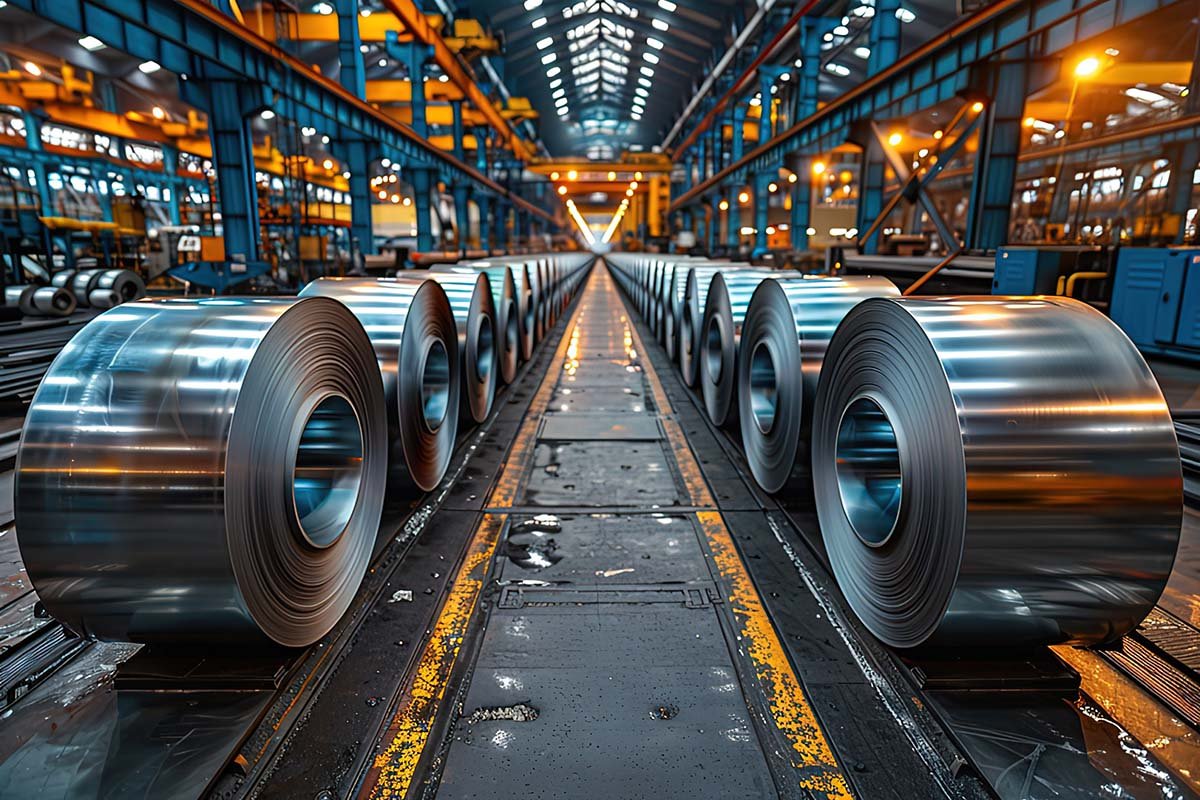
Exports decline for the third consecutive year. Analysis by the siderweb Research Office. Italian steel exports (iron and steel products, pipes, and other primary processing products) continued to decline in 2025. Last year, steel exports fell in value by 5.7% compared to 2024, from €20.9 billion to €19.7 billion. This is according to data published by Istat and revised by the siderweb Research Office . Results, caused by a progressive decline in both prices and quantities sold , which therefore record the third consecutive slowdown after the two-year growth period 2021-2022 (closed with +51.7% and +23.8%). Exports fell by the same amount as imports, which also dropped 5.7% (€21.1 billion). Italy thus confirmed its position as a net importer of approximately €1.4 billion. Looking at the data by province , we note that the top 20 steel provinces in Italy exported steel worth 16.3 billion euros, a 5.1% decrease compared to the 17.2 billion euros in 2024. The predominance of Lombardy's districts in the Top 10 is confirmed, consolidating the geography of Italian steel production hubs that was created after the 2008-2009 crisis. Higher-than-average changes were recorded in Genoa (+8.3%), which rose to 18th place; Ravenna (+7.7%), which rose to 11th place; Verona (+5.5%), which dropped one place to 12th; and Brescia (+2.0%), which remained stable at the top. The provinces that showed the most significant declines were Mantua (-14.9%), which dropped one position to fourth place; Milan (-12.8%), which remained stable in sixth place; Lecco (-12.1%), which fell to ninth place; and Aosta (-11.8%), which remained in 13th place. The top three thus saw a shift compared to 2024: the province of Brescia remained in first place, followed by Udine and Cremona. Brescia sold €1.9 billion worth of steel outside Italy, up 2% compared to 2024. Supporting the partial recovery of the Brescia hub, after last year's declines, were positive performances in all three export categories: steel products (+0.5%), pipes (+7.4%), and other steel products (+4%). Udine comes in second, with a value of €1.8 billion, a decline of 4.7%. This result has caused the Friulian province to widen its gap with Brescia, with the difference between the two areas increasing from approximately €3 million to €127 million. The declines are due to a contraction in shipments of steel products (-4.3%) and other steel-processing products (-8.2%). Finally, the province of Cremona moved up one position compared to 2024 (overtaking Mantua) and recorded exports worth €1.5 billion, a 2.8% annual decrease. In particular, the Cremona hub saw an increase in sales of steel products (+3.2%), which mitigated the more than 8% decline in pipe exports. Taranto (home to Acciaierie d'Italia) remained outside the Top 20 for the second consecutive year. Its export value fell from 362 million euros in 2022, to 281 million in 2023, to 70.4 million euros in 2024 (-75%) and to 42.0 million in 2025, a 40.3% drop compared to the previous year. Terni (home of Arvedi Ast) gained ground thanks to a decline in exports (-7.3%), less than that of the Lecco hub (-12.1%). Exports of steel products decreased by 7.8% and those of pipes by 20.8%, while sales of other primary steel processing products increased by 19.7%. Livorno (where JSW Steel Italy operates in Piombino) dropped from 23rd place in 2024 to return to the Top 20, ranking 19th. In 2025, the Livorno hub's exports were valued at €188 million, down 4.6% due to slowdowns in steel products and pipe sales abroad.

27/03/2026
Para obtener información: Siderweb

Boiler market expected to contract sharply in 2025: warning signs for the sector

Over 140,000 fewer units sold in 2025, Assotermica "Companies in the sector at risk" Amidst general uncertainty in the heat generator sector, the Italian boiler market is expected to see a significant decline in sales volumes in 2025, indicating growing concern for the entire industry. Data from Assotermica, an association of heating system equipment and components manufacturers affiliated with Anima Confindustria, for the main product categories shows a widespread decline, particularly sharp in the domestic boiler segment, which represents the core of the market for companies in the sector. Specifically, wall-mounted boilers will drop from 911,899 units sold in 2024 to 769,090 in 2025, a decline of 15.7%. This is a worrying figure not only because of the relative importance of this category, but also because of its strategic role in the residential system renovation process. The negative trend also extends to floor-standing boilers, which fell from 8,342 to 6,340 units (-24.0%), blown boilers, which fell from 4,252 to 3,626 units (-14.7%), and gas water heaters, which fell from 310,021 to 291,084 units (-7.5%). The situation is no better for generators that integrate renewable energy, with hybrid appliances slowing further, reaching 9,040 units (-5.0%), as did heat pump water heaters, which dropped from 23,516 to 22,916 units (-7.5%). Only burners bucked the trend, recording an increase from 23,539 to 25,581 units (+8.7%). Data analysis paints a picture of a slowdown that cannot be interpreted as a simple economic fluctuation. Instead, it reveals a period of structural uncertainty that risks compromising the market's ability to support the technological replacement of existing systems. Indeed, in Italy, a large share of obsolete appliances remains—approximately 9 million—characterized by lower efficiency levels than currently available solutions and a higher energy and environmental impact. The decline in sales therefore takes on an even more critical significance, impacting not only the economy of a sector that employs thousands of workers, but also slowing the process of improving building efficiency, with direct effects on household energy consumption and the overall sustainability of the system. "In a context like the current one," says Assotermica President Giuseppe Lorubio , "it is crucial that institutions pay maximum attention to a sector that plays a central role in the country's energy efficiency journey. The data clearly shows a slowdown in system renewal, precisely when it would be necessary to accelerate the replacement of obsolete technologies with more efficient solutions. The regulatory framework has undergone profound changes in recent years: now is the time to restart, clearly defining the plans to adopt for the future of building efficiency. It is equally important to ensure a clear, stable, and coherent incentive system: tools like the Ecobonus and the Home Bonus must be able to concretely support families' choices." The outlook for 2025 therefore highlights a highly critical phase for the sector, where declining volumes are compounded by a context of global uncertainty that risks amplifying its critical issues. Companies in the supply chain, deeply rooted in the national production system, are facing a reduction in demand that could have direct repercussions on business continuity and employment, at a time when there is a greater need to stabilize cash flows to invest in future-oriented solutions. In the absence of clear signals and a medium- to long-term vision, the risk is that the sector will gradually weaken, precisely at a time when the heating industry's contribution is essential to supporting the energy transition.

27/03/2026
Para obtener información: Anima Confindustria

CastForge 2026: Record participation figures and inspirational European input

530 exhibitors from 30 countries presenting their latest innovative products and services – CastForge providing the perfect platform for networking, industry expertiseThree months before the event is set to start and CastForge 2026 is already fully booked out. There will be around 530 international exhibitors coming to Messe Stuttgart from 9 to 11 June 2026, ready to present everything this industry has to offer – from cast and forged parts to assembly-ready components and processing techniques. CastForge is sending a clear message and confirming its position as an established industry platform, in what are currently economically challenging times.CastForge provides a unique overview of the market, with a programme perfectly designed to coordinate supply and demand. Exhibitors present their products and services to a highly qualified industry audience comprising designers, developers and decision-makers from mechanical engineering, automotive engineering, industry and energy technology. This is where innovative solutions meet concrete project enquiries, resulting in valuable connections with real business potential. The trade fair provides visitors with information about the latest industry developments, the chance to explore tomorrow’s technological trends, as well as directly engage with leading players on the European casting and forging scene.Major international appeal and European focusTwo thirds of the exhibiting companies are coming from Germany and elsewhere in Europe, such as the French association “Village Forge & Fonderie”, which represents around twenty foundries and forges. Wilfrid Boyault, Managing Director of the Fédération Forge Fonderie, explains: “The joint presence in the French “Village Forge & Fonderie” is sending a strong and clear message to the European and broader global market. It is showcasing the key strengths of our companies – industry capacity, technical excellence, quality, innovation and competitiveness.”The Italian foundry and forging industry is also well represented: trade association UNISA will be taking part with around 25 companies, eleven of which will be at the joint stand. Andrea Redaelli, President of UNISA, emphasises: “CastForge 2026 provides a concrete opportunity for our members to develop new business strengthen their own visibility and engage in professional networking. Altogether, there will be around 70 Italian companies represented – a significant contribution from Italy within the sector on a European stage.”Portugal will be represented for the second time by a strong group of METAL PORTUGAL companies specialising in a variety of areas covering casting, forging and metal processing. Mafalda Gramaxo, General Director, explains: “CastForge has established itself as one of the most relevant European trade fairs for the casting and forging industry. For the Portuguese companies, it provides a valuable opportunity to directly connect with highly qualified buyers and to strengthen our international presence.”Growth, internationality and innovative strengthCastForge 2026 stands for growth, internationality and innovative strength. Despite a challenging economic climate, the professionals are looking forward to what is now an established industry event and the opportunity to explore new business opportunities and concrete projects.Hub for high achievers: Direct access to industry expertsCastForge 2026 will be providing trade visitors with unique opportunities, such as direct access to national and international exhibitors from 30 countries and the chance to benefit from their extensive expertise. The trade fair not only provides a comprehensive market overview, but also specific information about the latest market trends and technological developments in casting and forging. Technical presentations, networking events and expert talks create the ideal platform for a comprehensive exchange of information, transfer of knowledge and initiation of new projects. Resulting in top-quality connections and new business opportunities that go far beyond the actual trade fair visit.Despite this year’s record number of exhibitors, CastForge remains a trade fair of accessible scale. Halls 8 and 10 are located directly at Entrance West, only a train stop away from Stuttgart Airport. This international airport offers a number of direct connections which operate daily to all key European cities, enabling CastForge visitors to make the most of this business opportunity – and often involving just one day of travel.Ticket sales and new Make-to-Order Days event.Tickets are now available to purchase and also grant visitors access to the new “Make-to-Order Days” event, the trade fair for buyers of precision parts, custom manufacturing and machining, on 9 and 10 June 2026 in Hall 9. Buyers involved in precision parts and machining are set to benefit twofold from just one ticket to CastForge!

12/03/2026
Para obtener información: Castforge 2026

Persian Gulf, the current situation will severely impact Italian mechanical exports

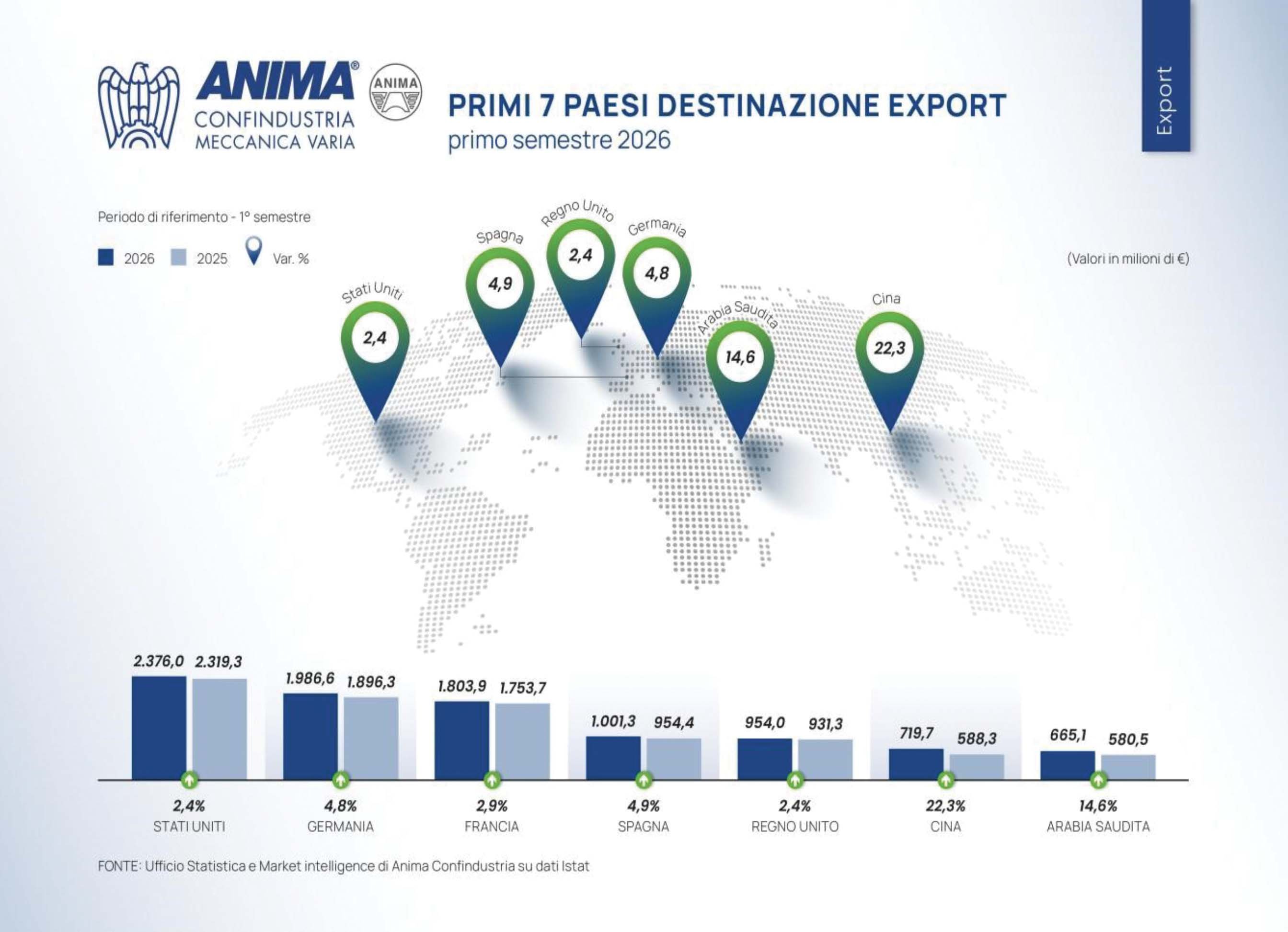
A strategic area for the sectors represented by Anima Confindustria, which saw a growth of 7.0% in the first half of 2025 towards the Gulf countries The ongoing geopolitical tension in the Persian Gulf will severely impact market stability and trade in a region that has seen steady growth in exports of Italian mechanical engineering, represented by Anima Confindustria, since 2024 . Recent data from Anima's Statistics Office show a 7.0% increase in exports to the Persian Gulf in the first half of 2025 —reaching a total value of €1.44 billion —compared to exports in the second half of 2024. In particular, the turbines, valves and fittings, cargo handling, and hydraulic pumps sectors recorded large export volumes to the United Arab Emirates, Saudi Arabia, Oman, and Qatar . This positive trend underscores the importance of maintaining trade ties with the Gulf countries, which have established themselves over the years as strategic partners for Italian mechanical engineering on the global stage. Pietro Almici, president of Anima Confindustria, commented: We sincerely hope that the current situation will be resolved quickly. We are particularly concerned about the Italian mechanical engineering sector, which exports approximately 60% of its products and possesses the capacity to compete internationally. The Gulf countries represent a valid alternative in the market diversification strategy, especially in light of the current challenges posed by US tariffs. Furthermore, let's not forget the issues related to freight and maritime transport, which are already impacting exports and energy costs for our companies. These dynamics make the ratification of the Mercosur-EU treaty even more important, to open up new development and cooperation opportunities for Italian and European industry.

10/03/2026
Para obtener información: Anima Confindustria

New STILL AXL 15 iGo autonomous electric pallet truck

Presented as a world premiere at LogiMAT 2026, the AXL 15 iGo automates truck loading and unloading STILL, a leading supplier of intralogistics systems and equipment, is presenting a true milestone in intralogistics at LogiMAT 2026: the first production-ready solution on the market for automating truck loading and unloading without the need for fixed safety technology at the loading bay. With the new autonomous AXL 15 iGo electric pallet truck, STILL is closing one of the last major gaps in warehouse automation: the management of incoming and outgoing goods directly at the loading bay. Automation comes to the loading bay The loading bay area is traditionally characterized by tight deadlines, staff shortages, night shifts, and challenging operating conditions, from high summer temperatures to freezing winter temperatures. Furthermore, limited space, variable trailer geometries, and very stringent safety requirements must be addressed. While many companies have long since automated warehouses, internal transport, and handling systems, truck loading and unloading has remained a process considered difficult to automate. “With the AXL 15 iGo, we're filling a historic gap in intralogistics, making automated truck loading and unloading an accessible and easily implementable standard for the first time,” explains Matteo Piantanida, Head of Sales Automation at STILL in Italy. “Our solution makes receiving and shipping goods more efficient, safe, predictable, and reliable. Process standardization enables repeatable workflows, significantly increasing operational stability and transparency. This is a key step in our strategy: to offer scalable automation solutions for every area of ​​intralogistics.” Thirty pallets in thirty-five minutes in an autonomous, flexible and safe way The AXL 15 iGo autonomous pallet truck was specifically developed for automating truck loading and unloading: two vehicles operating in tandem can autonomously load up to 30 EPAL pallets in approximately 35 minutes. Thanks to innovative localization and positioning logic integrated with a new, holistic safety concept, the truck can automatically recognize the trailer's internal configuration and precisely position the pallets. A particularly significant advantage for users is that the AXL 15 iGo does not require any fixed safety systems at the gate, such as scanners or reflectors installed on the bay or in the trailer. This makes the solution highly flexible, quick to implement, and easy to integrate into existing operations. Safety and precision in the tightest spaces To ensure safe handling and precise navigation, the AXL 15 iGo uses two complementary technologies: on the outside of the trailer, it uses Visual SLAM 3D localization technology; on the inside, it uses LiDAR-based localization, which allows for centimeter-level accuracy. The truck also integrates LiDAR safety scanners, camera systems, light and acoustic signals, and 3D pallet detection. A solution for multiple sectors The AXL 15 iGo is particularly suited to sectors with high volumes of pallets and standardized load units, such as 3PL operators, food logistics, retail, and manufacturing companies. With a load capacity of up to 1,500 kg and a speed of up to 2 m/s, the truck can meet a wide range of industrial needs. Integration into automated fleets is scalable via a VDA 5050 interface, a dedicated fleet manager, and open APIs for warehouse management systems (WMS). World premiere at LogiMAT 2026 STILL will present the AXL 15 iGo to the public for the first time at LogiMAT 2026, in Hall 10, Stands B40 and B41. The truck will be available immediately after the trade fair. “Our customers ask us for solutions that can be implemented immediately. That's why we chose to launch the product only once it was ready for rapid market release,” says Piantanida. About STILL Specializing in intralogistics solutions, STILL has a product portfolio that includes forklifts, warehouse technology, connected systems, and services. Founded in 1920 by Hans Still, the company offers customized and customer-optimized solutions, backed by excellent service. STILL's goal is to make intralogistics "intelligent," developing solutions that make warehouse operations smoother and more efficient, protect the health of workers, and simultaneously meet the highest sustainability standards. With this goal, STILL is committed to promoting new solutions for electric mobility, automation, fleet and energy management, as well as circularity, i.e., the consistent conservation and recycling of resources. Headquartered in Hamburg, STILL employs 7,100 people and is present in 89 countries. The Italian organization can count on the most solid and widespread sales and service network in the country, consisting of 10 direct branches, over 50 dealers and partners, 950 service technicians and over 170 sales representatives.

02/04/2026
Para obtener información: Still

Tezmaksan: Making automation accessible to every factory

Cobots are changing manufacturing, but the real value comes from seamless integration Cobots have radically redefined expectations for automation, emerging as a direct response to some of the industry's most pressing pressures. Persistent labor shortages, rising production demands, and the physical limitations of traditional factory layouts have made flexibility a priority. Their appeal lies in their combination of simple integration, affordable investment levels, and the ability to operate safely. In this article, Hakan Aydoğdu, CEO of Tezmaksan Robot Technologies, a company specializing in CNC automation, reflects on how collaborative technologies are redefining automation. The latest World Robotics 2025 report highlights the rapid acceleration of this shift towards automation. Industrial robot installations reached 542,076 units in 2024, more than double the figure recorded a decade earlier. This is the fourth consecutive year in which annual installations have surpassed the half-million mark. Asia continues to dominate, accounting for nearly three-quarters of all new installations, while Europe and the Americas account for much smaller shares. These numbers reveal not only the speed of adoption but also the global imbalance in automation readiness. The global automation landscape Recent research by Make UK highlights that approximately 36% of manufacturing vacancies are difficult to fill due to a lack of candidates with the right skills, qualifications, or experience. Collaborative robots are playing an increasingly important role in filling this gap. By taking on repetitive, physically demanding, or high-risk tasks, cobots help manufacturers maintain production levels even in times of labor shortages. Cobots consistently deliver increased productivity and more reliable quality, freeing human workers to focus on complex or value-added tasks. They also help improve workplace well-being by reducing stress and injuries, and their simple programming makes automation achievable without long wait times or extensive training. For many companies, this combination accelerates the path to a measurable return on investment. Navigating the new regulations In the manufacturing sector, cobots are increasingly used to optimize assembly lines and improve operational workflows. Studies indicate that cobots can significantly improve productivity by automating repetitive tasks and allowing human workers to focus on more complex tasks that require cognitive skills. Regulatory frameworks are evolving alongside this technological momentum. The EU Machinery Regulation 2023/1230, which replaces the previous Machinery Directive, was adopted in 2023 and will be fully applicable from January 2027. It introduces a more rigorous approach to safety, liability, and cybersecurity for advanced machines and collaborative systems. The new requirements push manufacturers toward clearer accountability and more rigorous compliance processes, signaling that compliance and safer integration will become a key factor in the implementation of automation in the coming years. For engineers, this has direct implications for the design, implementation, and validation of collaborative robotic systems. In logistics environments, cobots are increasingly used for palletizing, order picking, and intralogistics material handling, where integrated vision systems, force sensors, and safety scanners enable close human-robot collaboration without traditional safety cages. In automotive manufacturing, cobots support precision assembly, screwdriving, quality control, and machine servicing, improving cycle time consistency and reducing ergonomic strain on operators. Best practices for seamless integration include conducting task-specific risk assessments in line with ISO 12100 and ISO/TS 15066, implementing safety-certified monitored shutdowns, speed and separation monitoring, and ensuring robust cybersecurity controls for connected robotic cells. Engineers are also advised to prioritize modular system architectures, standardized industrial communication protocols (such as PROFINET or EtherCAT), and digital simulation tools to validate layouts and workflows prior to physical implementation.   Challenges in legacy production environments Many manufacturing environments are aging or are built around legacy systems that weren't designed for robotics. Restricted layout plans, outdated infrastructure, or patchy connectivity can complicate integration. When new technology meets older equipment, the process can become costly or time-consuming if the two aren't seamlessly aligned. A robot's capabilities alone don't determine how collaborative automation will work. Installing and configuring robotic systems, integrating software, and maintaining everything involved can push a team beyond its current capabilities. The initial costs, from the equipment itself to facility modifications and staff training, can seem high, especially in the current economic climate. Traditional robots, typically built for fixed, repetitive tasks, often require extensive reprogramming every time they change products or layouts, resulting in downtime that can quickly erode their overall advantage. To address these limitations, manufacturers are adopting increasingly flexible automation approaches that prioritize rapid deployment, reconfigurability, and scalability of investments, especially for small and medium-sized operations. For example, the CubeBOX EcoLEAN-V1 and V2 allow systems to be repositioned and adapted as workflows evolve. This flexibility allows manufacturers to scale automation incrementally without tying production to fixed layouts. This reflects a broader shift towards agile automation, solutions designed to adapt to changing production needs. EcoLEAN is available in various configurations to support different payloads, part sizes, and space constraints, enabling deployment in a wide range of production environments. The right investment A Deloitte survey of 600 manufacturing executives in 2025 found that 80% of them plan to invest 20% or more of their improvement budgets in smart manufacturing initiatives this year, with a focus on core tools and technologies. This level of commitment signals a clear shift in the industry: manufacturers no longer view digitalization and automation as optional upgrades, but as essential capabilities that will define competitiveness in the years to come. While collaborative technology is driving this transformation, it is flexibility, mobility, and financial accessibility that will ultimately redefine how manufacturing operates and who has access to the benefits of automation.

30/03/2026
Para obtener información: Tezmaksan

Makino F6: High stability (roughing+milling)2

The Makino F6 vertical machining center celebrated its European premiere at EMO 2025. It is designed for stable, sustained high-precision machining of plastic molds, injection molding dies, and die-casting molds in particular. Its design ensures exceptional thermal stability and high-speed performance for superior surface finishes and reduced cycle times. What makes the F6 so special The four pillars of Makino's F6 concept are rigid design, spindle technology, thermal management, and intelligent software. The strengths of this vertical machining center include spindle technology with core cooling and under-race lubrication, excellent thermal behavior in normal environments, precision and long-term reliability for superior surface quality, and an automation-ready design. Optimized for 3D contoured geometries and tight-tolerance applications in the mold and die industry, the F6 offers high levels of precision for long machining hours and an extended Y-axis travel of 650 mm to accommodate increasingly square molds. Main features Structural Rigidity and Thermal Stability: Using finite element analysis (FEA) to design the machine's extremely rigid structure, the f6 dampens vibrations for long-term precision, while the unique axis configuration eliminates overhangs and ensures full axis support throughout the entire work envelope. Ball screws and cooled-core nuts maintain thermal equilibrium during high-speed operations. Motor flange cooling prevents any heat transfer from the motor to the machine structure, while cooling the support bearings improves their lifespan and thermal stability. Spindle Innovations: Core cooling, under-race lubrication, Oilmatic closed-loop temperature control, and multi-plane balancing to reduce vibration and improve surface finish are innovative features resulting from Makino's leadership in spindle technology. The f6 features a 20,000-rpm HSK A63 spindle as standard, while a 30,000-rpm HSK-F63 spindle is available as an option. Motion Control and Software: Developed for high-feed rate, tight-tolerance 3D machining, this machine's Super Geometric Intelligence (SGI.5) software maintains high accuracy even with complex NC data and significantly reduces cycle times compared to standard CNC systems. Multiple advanced motion modes allow users to customize the machine's behavior to specific job requirements. The f6's Professional 6 control integrates Fanuc hardware and a Windows Embedded operating system to offer ease of use on a 15-inch multi-touch screen, with a layout that adapts to the operator's workflow from setup to execution. Automation and Monitoring: The large side door for robot integration, top access for overhead crane operations, and easy access to the automatic tool changer (ATC) and spindle make the f6 automation-ready. The optional machine monitoring system allows real-time monitoring of machine condition, production, and tooling. Chip Management and Maintenance: Efficient chip removal is ensured by a five-nozzle system (four cooling nozzles and an air blower) around the spindle, optional through-spindle air and coolant, a front-mounted chip tray accessible during machining, and an optional conveyor for large-volume chip removal. Maintenance of the f6 has been simplified thanks to centralized access to the pneumatic, hydraulic, and lubrication systems. Company Profile Makino Milling Machine Co., Ltd. is recognized as a leading technology and service provider in the machine tool industry. The company is listed on the Tokyo Stock Exchange and employs approximately 4,800 people in the Americas, Europe, and Asia. Its revenue for the fiscal year ending March 31, 2025, was €1.4 billion. Makino's broad range of high-quality manufacturing solutions includes machining centers for component production and mold and die manufacturing for a wide range of applications in the aerospace, automotive, off-highway vehicle, industrial components, and microtechnology industries. Makino Europe employs 250 people at technology centers and offices in Germany, Italy, France, Spain, and Slovakia, focusing on marketing, sales, application engineering, and customer support.

27/03/2026
Para obtener información: Makino

Compactness, control and performance: Linde MH expands its offering with the new Ri14 – Ri18 reach trucks.

Linde Material Handling (MH) presents a new series of reach trucks to the Italian market, designed to ensure efficiency, safety, and ergonomics in warehouse applications. At LogiMAT 2026 , Linde MH presents the new Ri14 – Ri18 reach trucks , expanding its offering with a range designed for warehouse applications, where compactness, safety and operational efficiency are decisive levers. With a load capacity of 1.4 to 1.8 tons, the new models are positioned in the standard application range, offering a targeted balance of productivity, safety, and operator experience. The compact design, with an integrated lithium-ion battery, allows for optimal use even in narrow aisles, making these trucks particularly suitable for distribution centers, retail, and industrial sectors such as food, automotive, and chemicals. As Samuele Albertini , Sales Training & Product Support Manager at Linde MH Italia, emphasizes: "The new reach trucks expand our offering for all companies requiring agile and versatile vehicles for daily operations. The Linde Ri range combines build quality, safety, and comfort, providing an effective solution for all warehouse handling, storage, and picking tasks." Designed for efficiency in warehouse operations The new Linde Ri14 – Ri18 trucks were developed to optimize space utilization and improve productivity in material handling operations. With an overall length of 1,215 mm and a turning circle (AST) of 2,709 mm, they enable efficient operation even in narrow aisle environments, while lift heights of up to 11 meters allow for maximum utilization of storage capacity. Performance can be further increased with the optional PowerDrive and PowerLift functions, which increase travel speed by up to 18% and lifting speed by up to 16% respectively, significantly improving operating times. Two different mast series ensure high residual capacities, while the Linde Load Control system ensures precise and smooth movements, with millimeter-precise load control. The Linde dual pedal control allows for intuitive control of the travel, simplifying operations and reducing response times. For multi-shift applications, a replaceable lithium-ion battery is also available, ensuring uninterrupted operation. Integrated security for operator and infrastructure Safety is a key element in the development of the new range. The standard all-wheel braking system, combined with hydraulic brakes on the load wheels, ensures short stopping distances regardless of load weight or mast position, offering maximum control at every stage of operation. The Linde Curve Assist system automatically adjusts the speed when cornering based on the steering angle, increasing vehicle stability and reducing the risk of overturning. The elevated driving position improves visibility of the load and the surrounding environment, while optional features such as the reinforced glass panoramic roof, shoulder protection and advanced assistance systems, including Linde Safety Guard and Rack Protection Sensor , help prevent collisions and damage to the racking. Ergonomics and comfort for long shifts The driving position is designed to reduce fatigue and improve operator well-being. Complete decoupling from the chassis absorbs shocks and vibrations, while the suspension seat and numerous adjustments for the steering wheel, seat, and pedals allow the driving position to be tailored to individual needs. Access to the vehicle is facilitated by a low, wide entry with a non-slip surface, ideal for frequent entry and exit. Numerous storage compartments complete a workstation designed for practicality and order during daily activities. Business continuity and simplified maintenance The new Ri series is designed to ensure high availability and longevity, while reducing operating costs. All maintenance-relevant components are easily accessible, allowing for quick service and reduced downtime. The integrated 14.3 kWh lithium-ion battery ensures high energy efficiency and can be replaced with a more powerful 21.4 kWh version for more intensive operating requirements. Furthermore, thanks to the modern electronic architecture, software updates and new features can be installed remotely (over-the-air), ensuring continuous improvement of vehicle performance over time. About LINDE MH Linde Material Handling develops high-performance goods handling solutions customized to meet individual customer needs. Linde MH, in addition to being one of the world's leading manufacturers of forklifts and manual and automated warehouse equipment, offers a wide range of fleet management solutions, driver assistance systems, mobile robots and a wide variety of software solutions, consulting services and technical support. The Linde MH brand represents maximum performance, achieved through technological innovation, superior standards of ergonomics and operator safety and a wide range of energy options. In Italy, Linde MH can count on a network of 6 branches, 2 established dealers, 21 dealers and partners, and over 800 specialized service technicians, to respond promptly and effectively to customer needs.

26/03/2026
Para obtener información: Linde MH

SICK S.p.A. achieves Great Place to Work 2026™ certification

SICK SpA achieves Great Place to Work® 2026 Certification, strengthening a culture of trust and transformation. SICK SpA has been officially certified as a Great Place to Work® for 2026. The certification, based entirely on employee feedback, confirms the company's commitment to building a culture of trust, accountability, and continuous improvement. The survey recorded an exceptionally high participation rate, reflecting strong employee engagement and a genuine desire to contribute to the organization's development. The results confirm a solid foundation of trust among teams and provide clear direction for further strengthening leadership effectiveness and organizational clarity. The certification comes at a strategic moment, as the organization continues its transformation within the Europe South & West Cluster. This achievement demonstrates that business evolution and a focus on people can go hand in hand. In recent years, SICK SpA has consistently worked to strengthen the credibility of its leadership, clarify roles and responsibilities, and promote a culture open to dialogue and feedback. Congratulating SICK SpA on achieving the certification, Sarah Lewis Kulin, Vice President of Global Recognition at Great Place To Work , said: “Successfully achieving this recognition clearly demonstrates how SICK stands out among the best places to work, offering its employees an excellent work environment.” Recognition by Great Place To Work confirms the strength of a healthy and inclusive work environment, capable of strengthening people's morale and productivity, as well as representing a key element in attracting and retaining the best talent. Massimo Azzerri, Senior Vice President SICK Europe South & West, states : “ Receiving this recognition based on direct employee feedback is a significant achievement. During a phase of transformation and strategic development, maintaining trust, transparency, and accountability is crucial. This certification highlights the solidity of our Italian organization and demonstrates the constant commitment of leaders and teams to fostering a work environment geared toward growth, the development of skills, and a sense of belonging .” Great Place to Work® is the global authority on organizational culture assessment, evaluating companies based on trust, fairness, pride, and team spirit. For SICK Italia, this recognition confirms not only a positive work environment but also the consistency between leadership principles and daily actions. SICK continues to invest in the development of its people and remains committed to strengthening its position as an employer of choice in the industrial technology sector. SICK is hiring . To explore career opportunities and join a company that puts people and performance at the center, visit: https://www.sick.com/it/en/career/w/career About SICK SICK is one of the world's leading suppliers of sensor solutions for industrial applications. Founded in 1946 by Dr. Erwin Sick and headquartered in Waldkirch, Breisgau, near Freiburg, the company is now a technology and market leader in its field and is represented globally with 63 subsidiaries and holdings, as well as numerous agencies. SICK employs over 10,000 people worldwide and generated group sales of €2.1 billion in 2024. Further information is available at: www.sick.com About Great Place to Work Certification™ The Great Place to Work® Certification™ is one of the most prestigious recognitions aspired to by companies wishing to be considered employers of choice. It is the only certification based entirely on employee self-reports about their work experience, specifically their consistency in a trusting work environment. Great Place to Work certification is recognized globally by employees and organizations and is the international benchmark for identifying and promoting excellent employee experience. Each year, over 10,000 companies in over 60 countries participate in the Great Place to Work certification process. About Great Place To Work® As the global authority on organizational culture, Great Place To Work® provides over 30 years of research and analysis to help organizations become great places to work for everyone. Its proprietary platform and For All™ model allow companies to assess the experience of every employee. The most effective organizations earn Great Place To Work Certification™ or are included in the prestigious Best Workplaces™ rankings. Learn more: greatplacetowork.com

19/03/2026
Para obtener información: SICK Spa

Real-time turning insights for safer, smarter automation

CoroTurn® Plus helps manufacturers stabilize quality, increase productivity and accelerate automation Sandvik Coromant, a world leader in metalcutting tools and manufacturing solutions, has introduced CoroTurn® Plus, a sensorized turning adapter that provides real-time visibility, increased process security, and scalable automation for turning operations. By making cutting forces, vibrations, chatter, and condition visible as they occur during cutting, the solution helps teams stabilize performance, improve component quality and consistency, and reduce waste. CoroTurn® Plus combines sensorized tools with two levels of digital capability. Used in conjunction with CoroPlus® Viewer, it provides real-time, passive information to support operator decisions. When combined with CoroPlus® Connected, the same signals enable active, machine-integrated protective actions within predefined limits, helping users clearly distinguish between visualization and automated response. CoroTurn® Plus sends real-time data from the cutting zone to CoroPlus® Viewer on a PC or tablet, enabling faster, data-driven decisions and traceable continuous improvement. Real-time visualization and benchmarking support precise interventions when trends deviate from predefined limits. Operators receive audible alerts when limits are exceeded, can scroll through values, and can analyze and report deviations to accelerate root cause analysis. As tool condition signals accumulate, teams can identify when an insert is nearing the end of its useful life and replace it at the right time, extending tool life and avoiding unplanned downtime. For machine-integrated control, CoroTurn® Plus connects to CoroPlus® Connected, which is fully integrated with the machine's NC. Users set chatter, load, and vibration limits within the software or via NC code; if an unexpected event occurs, the control automatically initiates protective shutdown actions to protect components, tools, and equipment. These actions can be configured by the end user. Feedrate and cutting speed override configurators enable in-process optimization, while data tracked by component position enhances diagnostics and continuous improvement. This autonomy allows the machine to manage more routine decisions within configured limits, increasing effective operating hours (especially during unattended evening or night shifts) and reducing downtime during the day. Industrialized features include automatic bar connection and disconnection, ready-to-run system controls, data logging start and stop, and system downtime messages. Storing and documenting cutting data for each cycle allows teams to compare batch performance, identify material deviations early, and maintain end-user documentation and certificates for complete traceability. Together, sensorized tools, visual analytics, and NC integration transform raw signals into enforced limits and actions, making production more stable, safe, and consistent, with fewer interventions. “With CoroTurn® Plus, we can observe hidden cutting behavior and transform it into clear signals so teams can recognize material variations, tool wear, and process instabilities as they occur,” said Åke Åxner, Global Project Manager – Machine Integration at Sandvik Coromant. “When combined with CoroPlus® Connected, the control makes protective decisions, stopping, retracting, and restarting within predefined limits, which reduces unplanned downtime and increases overall machine utilization.” “Sensorized tools represent the most practical solution to more advanced automation because they transform raw signals into safe actions applied by the machine,” added Leland Bailey, Project Manager at Sandvik Coromant. “By capturing high-resolution cutting data and connecting it directly to the control, teams can open unattended windows, reduce downtime, accurately identify the end of insert life, and reinforce best practices. At the same time, clear, actionable visualizations help operators of all experience levels make confident, informed decisions.” For the production of high-quality components such as discs, cases, shafts, pumps, and valves, CoroTurn® Plus offers unprecedented real-time insights into what's happening directly inside the cut. For more information, visit the website. Sandvik Coromant Together with customers and partners, Sandvik Coromant paves the way to a sustainable future and provides tooling solutions to mechanical engineering industries worldwide. Over eighty years of practical experience have allowed us to build a wealth of knowledge in metal cutting and machining. This expertise transforms every challenge into an opportunity for innovation, collaboration, and cutting-edge solutions. Our goal is to pursue positive change by promoting sustainability, efficiency, and growth to shape a future where innovation is at the forefront. Part of the global industrial engineering group Sandvik, Sandvik Coromant is committed to building the future, together with its customers.

18/03/2026
Para obtener información: Sandvik Coromant

Feria y Eventos

Suscríbete a nuestro boletín
Para mantenerse actualizado sobre las últimas noticias del mundo industrial
Contáctanos
Boletín de imágenes LIndustriale
Dati Legali

L'industriale s.r.l.
P. IVA: 12212870153
Codice Fiscale: 12212870153

Sede Legale

Via Carlo Dolci, 32
20148 Milano (MI)
Italy

Registro Imprese

Iscrizione R.I.: 12212870153
REA: MI-1539011
Capitale sociale: Euro 10.400,00 i.v.

Top
This website is protected by reCAPTCHA, therefore the Google privacy policy and terms of service apply.